OpenZhenZhen AI 提示词画廊 · gpt-image-2.5 · image
纪念碑式超现实建筑空间概念海报模板
Monumental Surreal Architectural Space Concept Poster Template
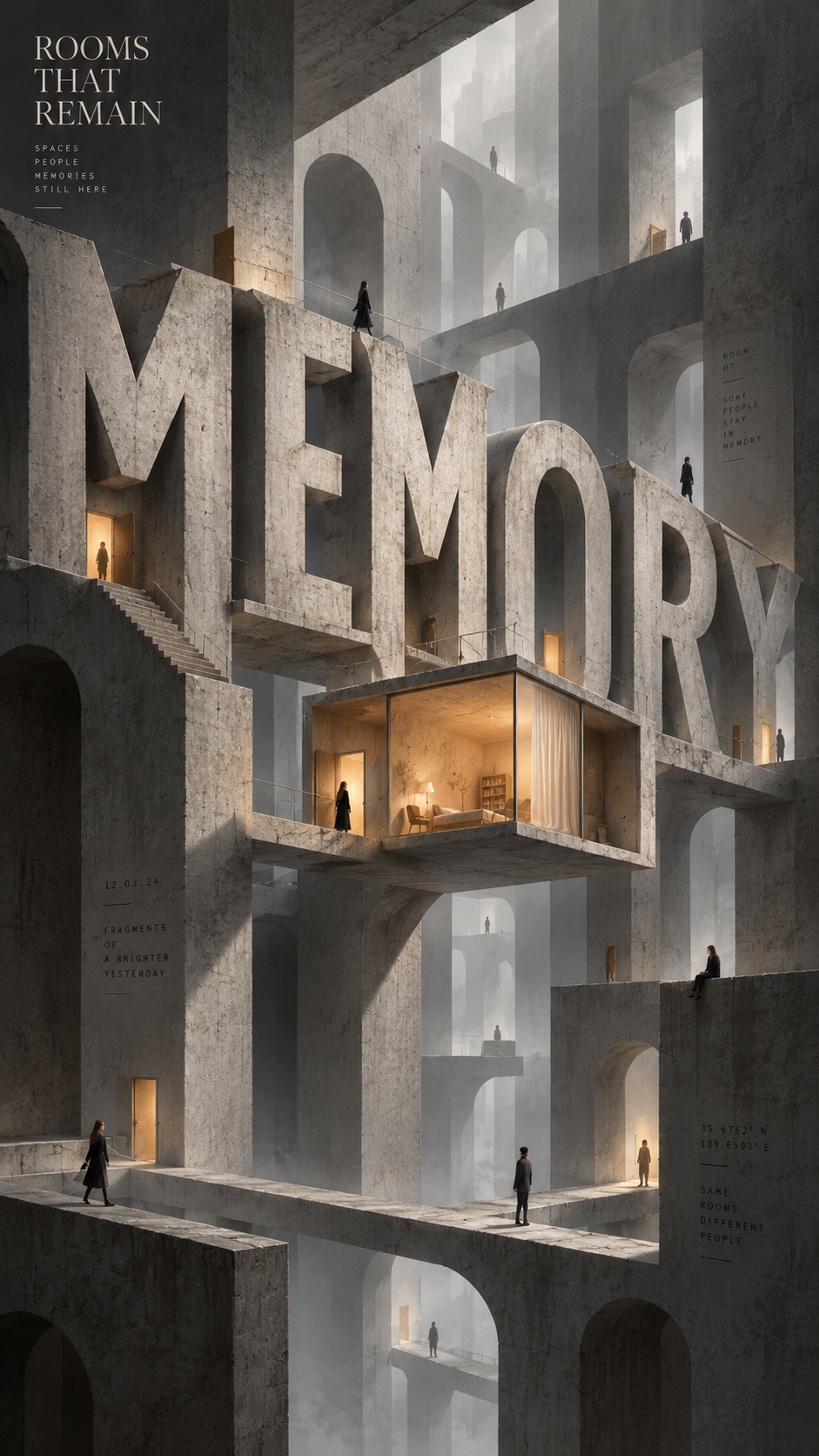
将抽象主题转化为纪念碑式超现实建筑空间,以融入建筑的巨型排版、微小人物、单一柔和强调色和实验性编辑印刷质感构成9:16海报。
提示词 / Prompt
中文提示词
【主题】记忆 【标题】留存之室 【主要排版】记忆 【空间隐喻】以破碎房间、门与走廊作为人类存在的痕迹 【标志性结构】宏大的破碎走廊系统中悬置一间孤立的温暖房间 【强调色】柔和琥珀色 【人物活动】8名微小的成年人物在破碎走廊中安静行走、等待或观察 创作一张9:16竖幅实验性编辑建筑海报,将所选抽象概念转化为具有纪念碑感的超现实空间环境。将“标题”作为简洁的编辑封面文案,将“主要排版”作为占据主导地位的巨型空间文字。使用已配置的固定身份参考作为微小成年人物的身份依据,同时让人物因尺度而显得细小、风格化,并从属于建筑。 不要只设计一栋建筑再把文字放上去;建筑本身必须从主题逻辑中生成。将主题转化为给定的清晰空间隐喻,并让标志性结构成为唯一主导的建筑姿态;围绕它构建整个构图,避免拼接无关的结构想法。即使缩小成缩略图,空间也应具有一眼可辨的独特身份。 将主要排版物理地融入墙面、平台、曲面、房间或结构元素。大字或数据遵循真实透视、比例、裁切、纵深和遮挡。文字可以跨越多个空间平面,也可以只在选定相机视角下才可读,但绝不能像平面图形叠加。主文字应易于快速识读,同时以其与空间的互动带来惊喜。 只加入少量与主题相关的次要编辑信息,例如功能标签、测量值、时间戳、房间信息、观察数据或简短概念短语。许多大面积表面保持空白,避免变成文字墙。建筑中安排约7–12名微小的成年人物,以自然姿态演绎给定的人物活动。他们用于建立尺度、距离和情绪氛围,不成为人像主体。 形成鲜明的建筑尺度差异:一至两个宏大的前景结构、中景元素,以及几个极其微小的远景形体;清楚区分前景、中景和远景。光影强烈但可信,并服务于概念。色彩限制在象牙白、浅混凝土灰、石墨黑和柔和低饱和氛围色;只在少量建筑表面使用给定的一种柔和强调色,使设计仍属于统一系列。 使用哑光混凝土、石材、玻璃或纸感建筑表面,并带有微妙颗粒、石墨纹理和细腻扫描噪点。整体接近精致建筑出版物、文化海报或实验性编辑印刷品,而非光泽CGI。保持强烈不对称、刻意留白和受控信息密度;避免传统展示板、规则网格和过度均衡的布局。最终画面应宏伟、理性、超现实、安静且略带忧郁,让排版、建筑、微小人物、光线和空间纵深构成连贯的视觉系统。
English prompt
【Theme】Memory 【Title】ROOMS THAT REMAIN 【Main typography】MEMORY 【Spatial metaphor】Fragmented rooms, doors, and corridors as traces of human presence 【Signature structure】One isolated warm room suspended within a monumental fragmented corridor system 【Accent color】Muted amber 【Human activity】Eight tiny adult figures quietly walking, waiting, or observing along the fragmented corridors Create a 9:16 vertical experimental editorial architecture poster that transforms the selected abstract concept into a monumental surreal spatial environment. Treat the Title as concise editorial cover copy and the Main typography as the dominant oversized spatial word. Use the configured fixed identity reference as the identity anchor for the tiny adult human figures, while keeping them small, stylized by scale, and subordinate to the architecture. Do not simply design a building and place typography over it. Generate the architecture itself from the logic of the theme. Translate the theme into the supplied clear spatial metaphor and make the signature structure the single dominant architectural gesture; build the entire composition around it and avoid combining unrelated structural ideas. The space should have one immediately recognizable identity even at thumbnail size. Integrate the main typography physically into walls, platforms, curved surfaces, rooms, or structural elements. Large words or data must follow real perspective, scale, cropping, depth, and occlusion. Type may cross multiple spatial planes or become legible only from the chosen camera viewpoint, but never appear as a flat graphic overlay. Make the main word quick to read yet surprising in its interaction with the space. Add only a limited amount of secondary editorial information related to the theme, such as functional labels, measurements, timestamps, room information, observation data, or short conceptual phrases. Keep many large surfaces completely blank; avoid a wall of text. Populate the architecture with approximately 7–12 tiny adult figures whose natural poses enact the supplied human activity. They establish scale, distance, and emotional atmosphere rather than becoming portrait subjects. Create strong differences in architectural scale: one or two monumental foreground structures, medium-depth elements, and several extremely small distant forms. Keep foreground, middle ground, and background distinct. Use strong but believable light and shadow that serve the concept. Maintain a restrained palette of ivory, pale concrete gray, graphite black, and soft desaturated atmospheric tones; apply the single muted accent color to only a small percentage of the architecture so the design remains part of a coherent series. Use matte concrete, stone, glass, or paper-like architectural surfaces with subtle grain, graphite texture, and delicate scan noise. Aim for a sophisticated architecture publication, cultural poster, or experimental editorial print, not glossy CGI. Maintain strong asymmetry, deliberate negative space, and controlled information density; avoid conventional presentation boards, regular grids, and perfectly balanced layouts. The result should feel monumental, intelligent, surreal, quiet, and slightly melancholic, with type, architecture, tiny people, light, and spatial depth forming one coherent visual system.
探索更多图片和视频提示词 · 生成图片 · 生成视频 · 在 AI 画布中创作
相关作品
- 复古日记风三张人像剪贴拼贴
将同一位约20–25岁的成年日本女性拍成三张姿势各异的随性上半身照片,重叠排成竖版剪贴拼贴,并以闪粉相框、半透明星星和可爱文具贴纸装饰。
- 酒红露肩造型东亚女性直闪人像
以3:4竖幅直闪数码摄影呈现一位成年东亚女性:三分之四侧身、轻拈发丝,穿酒红露肩短上衣与白色波点围巾,置于偏暗的虚化室内背景。
- 作品角色日系游戏吉祥物化群像设计
将指定作品的7–9位代表角色转译为统一的兔耳电子面罩吉祥物群像,以金字塔构图、作品级3–5色配色和极简竖向背景呈现。
- 桃花意境中的成年中国女性古典人像
明确成年的中国女性身着唐风汉服风格丝绸衣裙,在粉白桃花间回眸;长发、古典饰物、柔和日光和暖米色背景构成浪漫而克制的竖幅人像。
- 湖畔暖阳下的成年女性人像
成年女性身穿带完整不透明内衬的奶油白抹胸百褶长裙,站在明亮湖畔木栈道上;栗棕长发、丝巾和十字架吊坠保留了来源的清新诗意。
- 22岁韩国成年女性灰色背心裙墙边人像
明确成年的22岁韩国女性身穿不透明灰色背心裙斜靠灰蓝墙面;短波波头、轻微倾斜姿势和冷调柔光构成安静的竖版编辑人像。